Best Dielectric Filters for Global Buyers in China Market?
Dielectric filters play a crucial role in various communication systems. These components help manage frequency signals effectively. The demand for dielectric filters in China has been growing significantly. According to Market Research Future, the global dielectric filter market is expected to reach $3.5 billion by 2025, expanding at a CAGR of 15.2%.
Chinese manufacturers are increasingly investing in dielectric filter technology. They aim to meet the rising demand from telecommunications and consumer electronics sectors. Companies like Skyworks Solutions and Murata Manufacturing are leading the way in product development. Their innovations enhance signal integrity, which improves overall system performance.
However, challenges remain in this competitive landscape. Quality control and technological advancements are vital for market success. Companies must continuously adapt to changing consumer needs. Identifying the best dielectric filters involves understanding specific applications and performance metrics. Buyers should consider factors like insertion loss and temperature stability in their decision-making process. While many options are available, not all may meet stringent requirements.

Overview of Dielectric Filters and Their Importance in the Market
Dielectric filters play a crucial role in modern communication systems. They are designed to allow specific frequencies to pass while blocking others. This capability helps in maintaining signal integrity. The need for such filters is growing as technology advances. They are essential in various applications, including telecommunications, broadcasting, and medical devices.
In China’s vibrant market, these filters are increasingly important. They enable clearer transmissions and minimize interference. However, not all filters are created equal. Manufacturers often highlight features that are impressive but may not translate into real-world performance. Evaluating performance metrics can be confusing. Buyers must look beyond marketing claims and focus on real case studies and user experiences.
As demand for dielectric filters grows, so does the complexity of choosing the right one. Potential buyers should speak with industry experts. Engaging with experienced professionals can reveal critical insights. Understanding the applications and requirements is key. Many buyers may find that their specific needs are not met by a one-size-fits-all product. Taking time to analyze options is beneficial, even if it feels cumbersome.
Key Features and Specifications to Consider When Choosing Dielectric Filters
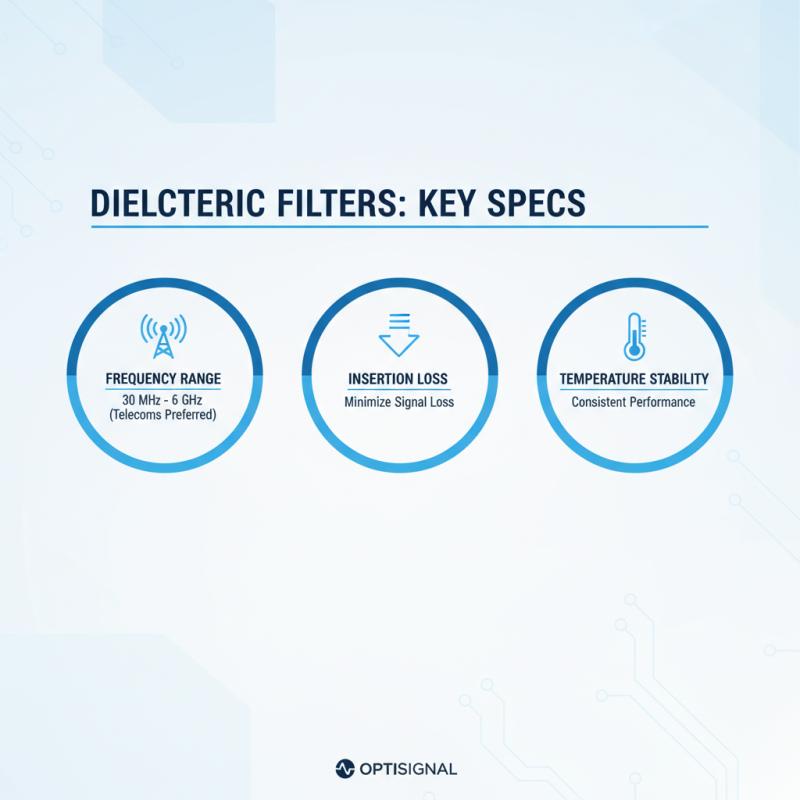
Choosing the right dielectric filter is crucial for optimal performance in various applications. Key features to consider include frequency range, insertion loss, and temperature stability. Reports indicate that filters with a wide frequency range are preferred in industries like telecommunications. They typically cover 30 MHz to 6 GHz, ensuring versatility.
Dielectric constant is another significant factor. A higher dielectric constant can lead to smaller filter sizes. This is beneficial for compact devices. However, monitor potential trade-offs between size and performance. The insertion loss should ideally be below 1 dB for efficient signal transmission. Remember, specifications vary widely. Aiming for too compact a filter may result in undesirable signal degradation.
Temperature stability is vital too, particularly in fluctuating environments. Dielectric filters must maintain performance despite temperature changes. Industry research shows that filters with a low temperature coefficient ensure reliable operation in extreme conditions. These characteristics make them suitable for both industrial and consumer applications. Always do thorough research before making a selection.
Top Manufacturers of Dielectric Filters in the Chinese Market
Dielectric filters are crucial in various applications, especially in telecommunications and medical devices. The Chinese market showcases numerous manufacturers who excel in producing high-quality dielectric filters. According to a recent industry report, China's dielectric filter market is projected to grow at a CAGR of 8% through 2025. This growth reflects the increasing demand for advanced technologies in wireless communications.
Key manufacturers in China are leveraging innovative technologies to enhance the performance of dielectric filters. One notable trend is the increasing shift toward miniaturization, which allows for smaller, more efficient filters. However, it is essential to note that not all manufacturers maintain consistent quality standards. Some firms struggle with production scalability and quality control issues. Focusing on these challenges is critical for buyers looking for reliable suppliers.
Moreover, the collaboration between manufacturers and research institutions has led to significant advancements. This cooperation has fostered the development of new materials and designs that improve filter efficiency. Some manufacturers have reported enhanced filtering capabilities with just a slight increase in production costs. As the market continues to evolve, buyers must remain vigilant in selecting partners who prioritize quality and innovation.
Comparative Analysis of Dielectric Filter Performance and Pricing
Dielectric filters play a crucial role in modern telecommunications and signal processing. Their effectiveness often hinges on material quality and design intricacies. In the competitive Chinese market, various options exist, each exhibiting different performance metrics and price points. Buyers should approach these filters with a keen eye for detail.
When comparing dielectric filters, consider insertion loss and bandwidth specifications. A filter with lower insertion loss enhances overall system performance. On the other hand, bandwidth affects the range of frequencies the filter can handle. Some filters may excel in one area but fall short in another. Buyers need to balance their specific application needs with these performance specifications.
Pricing can vary significantly among different suppliers. Factors like materials used and manufacturing techniques often determine costs. While some filters promise high performance, they may come at a premium. However, less expensive options can also deliver satisfactory results if chosen wisely. It's essential for buyers to consider long-term benefits over initial costs, making informed decisions that enhance reliability and service.
Best Dielectric Filters for Global Buyers in China Market? - Comparative Analysis of Dielectric Filter Performance and Pricing
| Filter Type |
Center Frequency (GHz) |
Bandwidth (MHz) |
Insertion Loss (dB) |
Price (USD) |
| Band Pass Filter |
2.4 |
100 |
1.5 |
150 |
| Low Pass Filter |
5.0 |
200 |
1.2 |
120 |
| High Pass Filter |
10.0 |
150 |
1.8 |
180 |
| Notch Filter |
3.5 |
50 |
2.0 |
130 |
| Diplexer |
1.8 |
120 |
1.6 |
200 |
Market Trends and Future Prospects for Dielectric Filters in China
The market for dielectric filters in China is evolving rapidly. This growth is driven by the increasing demand for high-frequency applications. Industries such as telecommunications and consumer electronics are seeking reliable solutions. The rise of 5G technology is a significant catalyst. As more devices connect, the need for efficient filtering becomes crucial.
Manufacturers are focusing on innovation. There is a push for better materials and designs. However, this shift also presents challenges. Achieving the right balance between performance and cost is essential. Many companies struggle to keep pace with technological advancements. Market dynamics can be unpredictable, affecting supply and pricing.
Looking ahead, collaboration is vital. Companies must partner with research institutions. This engagement fosters knowledge sharing and innovation. It can help address current limitations in dielectric filter technology. Consumers will benefit from improved products and reliability. The potential for growth in China’s dielectric filter market is promising, but it requires constant adaptation and attention to emerging trends.
Best Dielectric Filters Market Trends in China
This chart illustrates the growth of the dielectric filters market in China from 2019 to 2023, showing a steady increase in market size, indicating favorable trends and future prospects in the industry.