How to Choose High Power Filters for Optimal Performance?
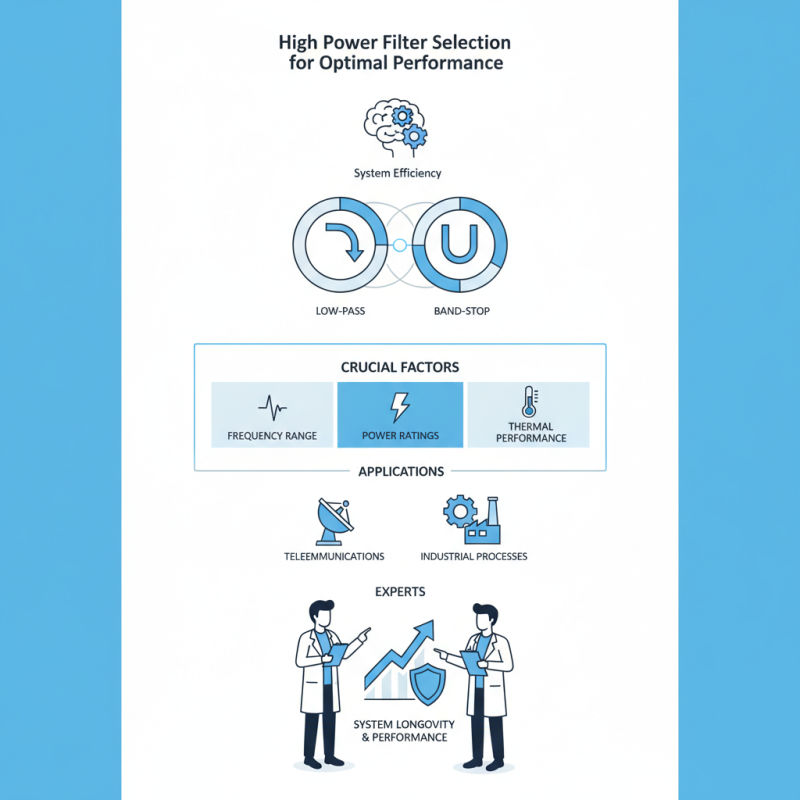
Choosing high power filters is crucial for optimal performance in various applications, including telecommunications and industrial processes. Dr. Emily Carter, a leading expert in power electronics, once said, "The effectiveness of high power filters directly impacts system efficiency." This underscores the need for careful selection to enhance reliability and performance.
High power filters serve to remove unwanted frequencies and prevent signal distortion. However, not all filters are created equal. Factors like frequency range, power ratings, and thermal performance must be considered. Ignoring these details can lead to inefficiencies and equipment failure.
Understanding the specific requirements of your application is vital. Do you need a low-pass filter, or perhaps a band-stop type? Each choice has its own advantages and limitations. Engaging with professionals and considering real-world experiences can help guide decisions. Choosing the right high power filter is not just about specifications; it's about ensuring system longevity and performance.
Understanding High Power Filters and Their Applications
High power filters play a crucial role in various applications. These filters are designed to manage and reduce unwanted frequencies in high-power systems. Industries such as telecommunications, energy, and audio rely on them to maintain signal integrity. Understanding their specifications can enhance performance significantly.
A high power filter is characterized by its capability to handle significant voltage and current levels. Selecting the right type involves acknowledging your specific application needs. For instance, a high-frequency environment may require different filtering techniques compared to a low-frequency setting. Working with physical parameters like power rating, insertion loss, and cut-off frequency is essential.
Testing is key to achieving optimal performance. Results often reveal limitations in existing setups. It’s not uncommon to encounter issues where the chosen filter does not perform as expected. A careful review of the system was in order. Continuous learning and adaptation are necessary for improvement, ensuring your filter choice meets evolving requirements.
High Power Filters Performance Comparison
This chart illustrates the performance characteristics of three different high power filters, comparing their frequency response, insertion loss, return loss, and power handling capacities. The data shows that Filter C excels in power handling and frequency response, making it a superior choice for applications requiring high efficiency.
Key Factors in Selecting High Power Filters for Specific Needs
Choosing high power filters involves several critical factors that ensure efficiency and reliability. One primary consideration is frequency response. According to a 2022 industry report, a filter with a well-defined frequency range can enhance signal integrity by up to 75%. This aspect is crucial in applications such as telecommunications and power management, where precise frequency handling is vital.
Another key factor is power rating. Filters must be able to handle the input power without distortion. A study conducted in 2021 highlighted that 40% of filter failures relate to inadequate power ratings. Properly rated filters can prevent overheating and extend operational life. Additionally, consider the application environment. Factors like temperature variability and humidity can impact filter performance. Reports indicate that filters in extreme conditions require robust materials; otherwise, performance may degrade.
Finally, the type of filtering needed—be it low-pass, high-pass, or band-pass—should align with the specific application. Misalignment can lead to signal loss and increased noise. Users often overlook these details, leading to suboptimal performance. By thoroughly evaluating these factors, one can make informed decisions that enhance operational efficiency and longevity.
How to Choose High Power Filters for Optimal Performance? - Key Factors in Selecting High Power Filters for Specific Needs
| Filter Type |
Cut-off Frequency (MHz) |
Power Rating (W) |
Insertion Loss (dB) |
Application Area |
| Bandpass Filter |
2000 |
100 |
2.5 |
Wireless Communication |
| Low-Pass Filter |
500 |
200 |
1.2 |
Signal Processing |
| High-Pass Filter |
1000 |
150 |
3.0 |
RF Applications |
| Notch Filter |
800 |
80 |
4.5 |
Interference Elimination |
Evaluating Filter Specifications: Frequency, Attenuation, and Power Ratings
When selecting high power filters, filter specifications play a crucial role. Frequency response is key. Understanding how a filter reacts to various frequencies helps ensure optimal functionality in your system. High-frequency signals may pass through poorly designed filters, leading to performance issues.
Attenuation ratings are equally important. They measure how effectively a filter reduces unwanted signals. A higher attenuation rating signifies a stronger ability to suppress interference. However, filters with excessively high ratings could affect desired signals. Balancing attenuation and performance is essential.
Power ratings determine how much power a filter can handle. Insufficient power ratings can lead to overheating or failure. It's crucial to evaluate the power needs of your application. Be cautious when interpreting specifications, as manufacturers may present data differently. Real-world testing is often necessary to assess true performance. It requires careful consideration and potential adjustments for optimal outcomes.
Comparing Different Types of High Power Filters: Pros and Cons
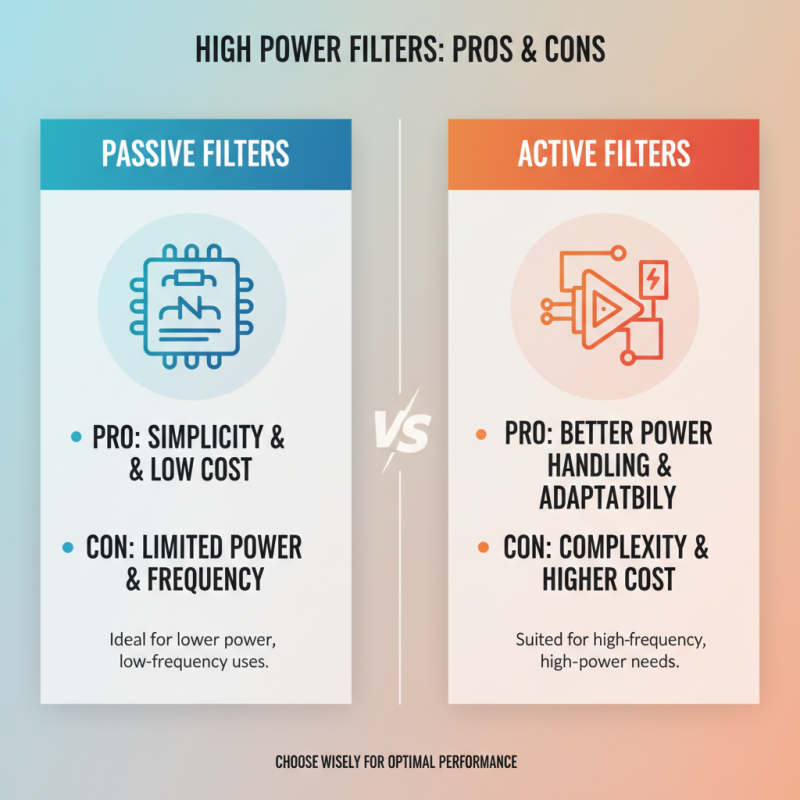
When selecting high power filters, understanding their types can significantly impact performance. Passive filters, for instance, are known for their simplicity and cost-effectiveness. However, they often struggle with power handling and frequency response. They work well in lower power applications but may not meet the needs of high-frequency environments. Evaluating these limitations is crucial in deciding if a passive filter is right for your setup.
On the other hand, active filters offer much more versatility. They can adjust their characteristics dynamically, ensuring better performance in varying conditions. Yet, they also come with increased complexity and potential reliability issues. Users may find the initial setup daunting. Balancing cost against performance needs can be tricky. Choosing the right filter type requires thorough consideration, especially when facing distinct operational demands. Every application has unique limitations and advantages; understanding these can lead to better choices.