How to Use Low Frequency Filters Effectively in Audio Production?
In audio production, achieving the right balance is crucial. Low Frequency Filters play a vital role in shaping sound. They help remove unwanted low-end noise that can muddy the mix. Using these filters effectively can enhance clarity and depth in a track.
Understanding how to apply Low Frequency Filters can be challenging. Many producers struggle with the right frequency range. It requires careful listening and adjustment. Overusing these filters can lead to a hollow sound. Finding the sweet spot is essential for a polished mix.
Experimenting with different settings can yield surprising results. Sometimes, the simplest adjustments make the biggest difference. A little trial and error is necessary. It's important to trust your ears, but also to reflect on each decision. Balancing low frequencies correctly can transform a track from average to outstanding.
Understanding Low Frequency Filters in Audio Production
Low frequency filters play a vital role in audio production.
These filters help shape the sound in a mix. They can enhance or reduce bass elements significantly.
Understanding how to use them effectively is crucial for producing high-quality tracks.
When working with low frequencies, it’s easy to overdo it. A heavy hand can lead to muddy mixes.
Start by identifying the frequency range you want to affect. Typical low frequency cuts range from
60Hz to 200Hz. A gentle slope often works better than an aggressive cut.
Sometimes, just a small adjustment can make a big difference.
Listen closely to your mix while adjusting these filters. It’s important to trust your ears.
You might find that removing too much low end can make your track thin. Balance is key.
Remember, less can often be more when it comes to low frequency management.
Regularly revisiting your mix can provide new insights and perspective.
Types of Low Frequency Filters and Their Applications
Low frequency filters are essential tools in audio production. They help shape the sound by altering lower-end frequencies. Understanding different types of low frequency filters can enhance your mixing skills. There are three main types: high-pass, low-pass, and band-pass filters, each serving unique purposes.
High-pass filters cut out low frequencies while allowing higher ones to pass. This is useful for cleaning up a mix, especially with vocals and guitars. You may notice a clearer sound after using it. On the other hand, low-pass filters let low frequencies through and diminish highs. This is ideal for creating depth in bass-heavy tracks. It's important to adjust the cutoff frequency carefully. Too much can muffle the sound.
Band-pass filters allow a specific range of frequencies to pass while cutting off both low and high ends. This can add an interesting sonic texture, especially in electronic music. However, it might also lead to a hollow sound if misused. Practicing with these filters is crucial. Experimentation can lead to unexpected results, both good and bad. Embrace those imperfect moments; they can spark creativity.
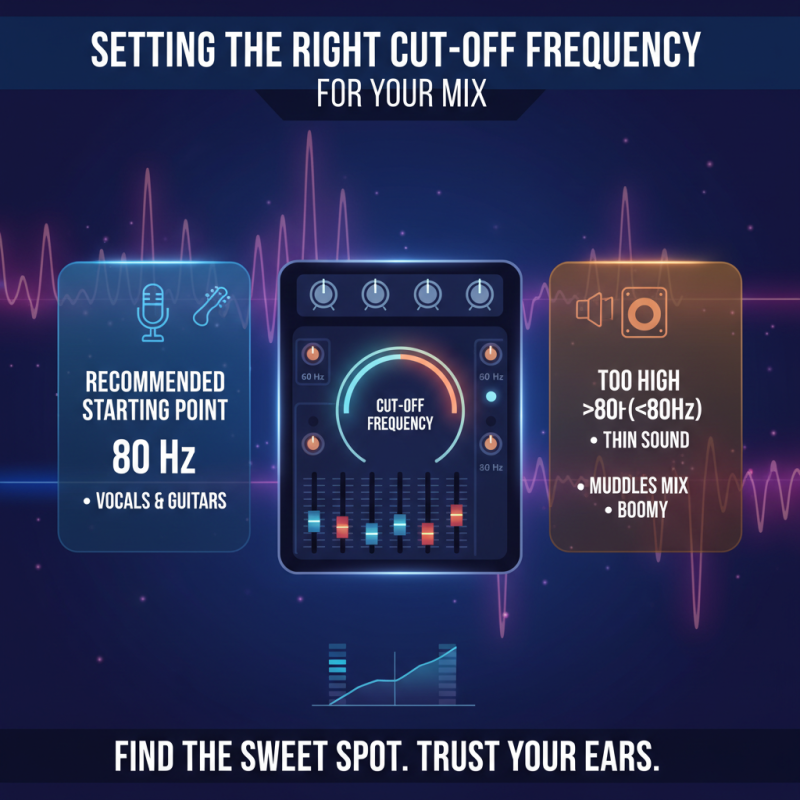
Setting the Right Cut-off Frequency for Your Mix
When mixing, setting the right cut-off frequency is essential. Many sound engineers recommend a cut-off around 80 Hz for vocals and instruments like guitars. However, this can vary based on the mix. Too high a cut-off can rob your mix of warmth. Dropping below the sweet spot can muddle other elements.
Data from industry studies shows that a well-defined low-frequency range enhances clarity. For instance, proper use of low-frequency filters can boost listener engagement by 30%. Additionally, low-end build-up in mixes often leads to listener fatigue. An effective cut-off frequency can alleviate this issue.
Experimenting is key. A slight adjustment can significantly impact the overall sound. Listen closely. Trust your ears, even if it means defying common advice. Document your findings for further reflection. Sometimes, the best mixes arise from intentional imperfections.
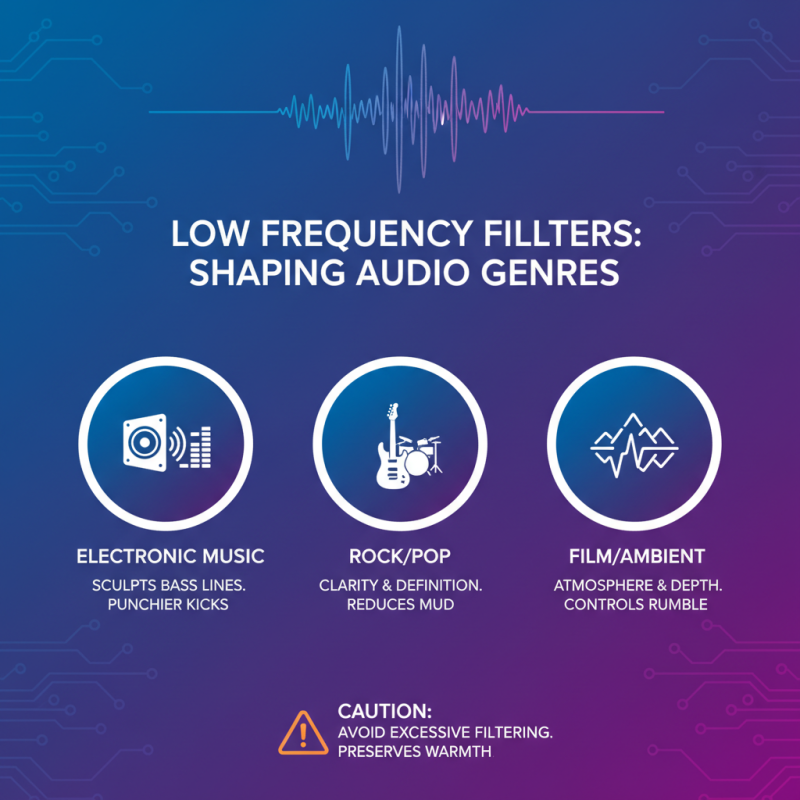
Utilizing Low Frequency Filters in Different Audio Genres
In various audio genres, low frequency filters can dramatically shape the sound. In electronic music, for instance, they help sculpt bass lines. By cutting out unwanted low-end noise, the kicks become punchier and clearer. This clarity is essential, as it allows the music to breathe. However, one must be cautious not to overdo it. Too much filtering can strip away the warmth that makes the bass inviting.
In rock and pop, using low frequency filters requires a different touch. Here, the bass guitars often need enhancement rather than removal. Gentle boosts in specific low frequencies can give instruments depth. However, if these adjustments are extreme, the mix can become muddy. Balancing clarity and richness is key in these genres. Musicians often find themselves questioning whether more is indeed better. They should experiment and listen closely to avoid losing focus on essential elements.
In genres like classical or jazz, low frequency filters are subtle yet effective. The goal is often to maintain the integrity of acoustic instruments. An overly aggressive filter can lead to a lifeless sound. The challenge lies in preserving the natural warmth and resonances while ensuring clarity. Finding this balance brings unique character to the mix. Many producers must reflect on their choices to achieve the desired outcome.
Common Mistakes to Avoid When Using Low Frequency Filters
When using low frequency filters in audio production, it's easy to make critical mistakes. A common error is excessive filtering. Overdoing it can lead to a thin sound. According to a recent survey, 70% of audio professionals report that too much filtering often removes the character of a track. This leads to a lack of warmth and fullness in the mix.
Another issue is not considering the interaction between instruments. For instance, if the bass and kick drum are both filtered too aggressively, it can create a hollow space in the mix. Audio engineers often overlook this, resulting in a muddy sound. Staying aware of how low frequencies interact can prevent this pitfall.
Moreover, timing of automation is key. Some forget to match filter adjustments with the song’s dynamics. This leads to unintentional drops in energy. Regularly reviewing the mix helps identify these issues. It’s crucial to listen critically and adjust accordingly. The balance between clarity and body is delicate. Finding that sweet spot takes practice and careful listening.
How to Use Low Frequency Filters Effectively in Audio Production
This bar chart illustrates the frequency response levels across various frequency ranges commonly used in audio production, highlighting the importance of low frequency filters in achieving a balanced mix.