High Power Filters Best Options for Global Buyers?
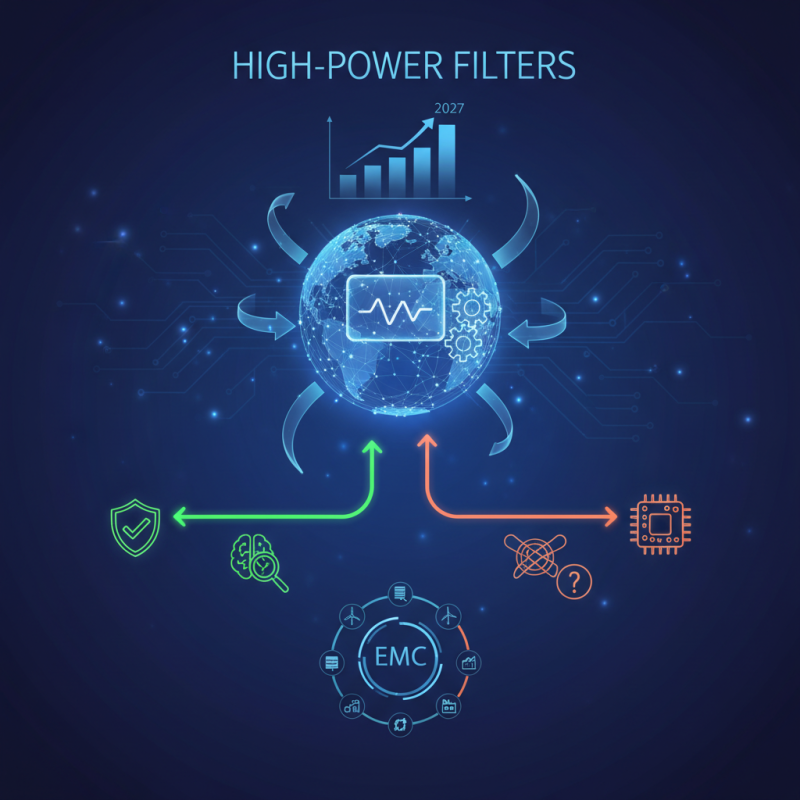
The demand for High Power Filters is trending globally as industries seek reliable solutions. According to a recent market report by Grand View Research, the global high power filter market is projected to reach $3.5 billion by 2027, growing at a CAGR of 6.5%. This surge underscores the critical role these filters play in enhancing operational efficiency and mitigating electromagnetic interference (EMI).
Experts in the field emphasize the importance of selecting the right high power filter. Dr. Elena Wang, a leading authority on electromagnetic compatibility, states, “Choosing the appropriate filter is essential for protecting sensitive electronic equipment from signal disruption.” However, many buyers encounter challenges in identifying suitable options. This gap in understanding highlights a need for clearer guidance on available choices.
The market is saturated with various filters, making it easier for buyers to feel overwhelmed. The efficacy of high power filters varies significantly between manufacturers. Ensuring product reliability is crucial, yet some options may lack proper certifications. This complexity suggests that potential buyers must conduct thorough research to navigate this intricate landscape effectively.
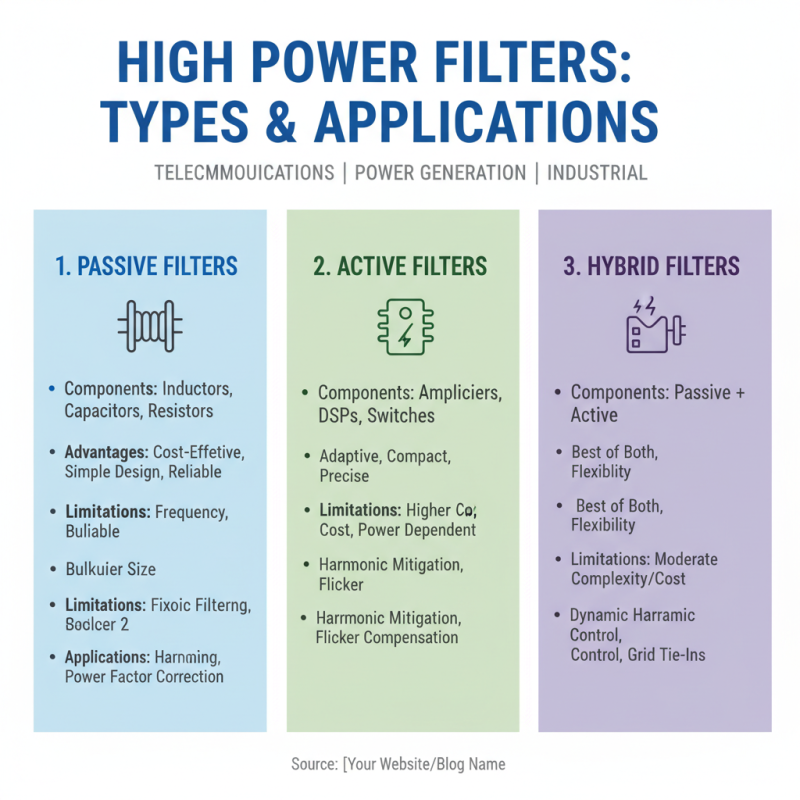
Understanding High Power Filters: Types and Applications
High power filters play a crucial role in various applications, especially in industries like telecommunications and power generation. Understanding the different types of high power filters can help buyers make informed decisions. There are primarily three types: passive filters, active filters, and hybrid filters. Each type has unique advantages and limitations.
Passive filters are known for their simplicity and reliability. They are often used in systems where lower energy loss is essential. A report by the International Electrotechnical Commission (IEC) noted that passive filters could achieve up to 95% efficiency in certain applications. Active filters, on the other hand, can adapt to changing conditions. They provide more precise control over the power quality but may require more maintenance. Hybrid filters combine the benefits of both types. However, they can be complex and costly.
In 2021, the global demand for high power filters was estimated to be around USD 3 billion, a number expected to grow significantly. Industries can also face challenges in implementation. For instance, knowing the correct specifications is vital. Misjudgments can lead to operational inefficiencies. Therefore, understanding the types and their applications is not just advantageous; it’s essential for maximizing performance and ensuring reliability in high power systems.
Factors Influencing High Power Filter Selection for Global Buyers
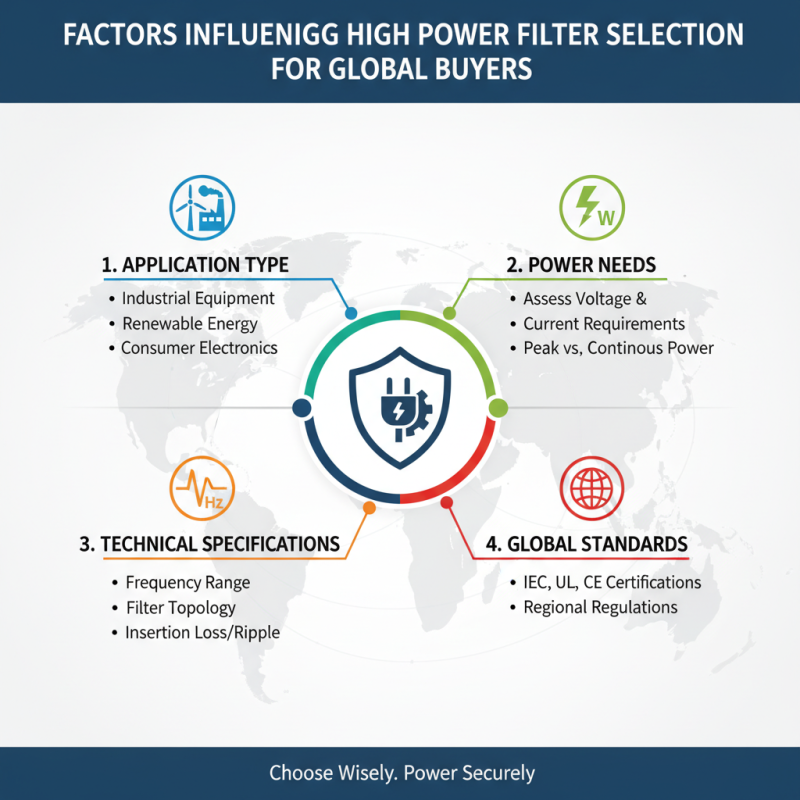
When selecting high power filters, several factors come into play. The application type significantly influences the design and specifications. Whether for industrial equipment, renewable energy systems, or consumer electronics, each application has unique requirements. Buyers must assess their specific power needs and determine the right specifications.
Another critical consideration is the environmental conditions in which these filters operate. High temperatures, humidity, and dust can affect performance and longevity. Ensuring that the filter can withstand these conditions is vital. Yet, many overlook this aspect, leading to premature failures. Buyers should also consider the regulatory standards applicable in their region. Compliance with these regulations ensures safe and efficient operation and can enhance the reliability of the filter selected.
Finally, buyers should evaluate the filter's maintenance requirements. Filters that are easy to maintain can save time and resources. However, many buyers often underestimate the importance of ease of serviceability. A filter that is too complex may lead to increased downtime. Critically assessing these factors can lead to better decision-making for high power filter selection.
Top Manufacturers of High Power Filters in the Global Market
The global market for high power filters is increasingly competitive. Buyers are often
overwhelmed by the options available. Various manufacturers specialize in high power filters, addressing
different industrial needs. These filters play a crucial role in ensuring clean power supply.
Manufacturers have developed innovative designs to cater to this growing demand.
Key players in the industry focus on reliability and efficiency.
They invest in advanced materials and technologies to enhance performance. The right filter can significantly reduce
noise and interference in power systems. Buyers often struggle to find a trustworthy source. It’s essential to
research product specifications carefully.
Evaluating the quality of high power filters requires expertise. Buyers should consider factors like
frequency range and power handling capacity.
However, the sheer variety of products can lead to confusion. Learning from reviews and industry feedback can
help navigate this maze. Ultimately, understanding the market landscape requires a commitment to exploration and a critical eye.
In the end, the best choice often boils down to specific application needs and
performance requirements.
Cost Analysis and Budgeting for High Power Filter Purchases
High power filters are essential in various industries, ensuring efficiency and minimizing electromagnetic interference. When considering a purchase, understanding the cost implications is crucial.
According to industry reports, the average price range for high power filters varies widely, typically from $500 to over $5,000, depending on specifications and performance needs.
Budgeting for high power filters should account for installation and maintenance costs. Many users overlook these factors, leading to unexpected expenses. Regular maintenance can increase a filter's lifespan by up to 30%, providing significant savings in the long run. Additionally, it's valuable to compare features versus price to determine the best overall value.
Tips: Conduct a detailed analysis of your power quality needs. This will help in selecting a filter that balances performance and cost-effectiveness. Furthermore, consider future requirements; investing a bit more initially may prevent larger expenses later. Finally, always check for warranty options. They can provide peace of mind and additional cost security.
Future Trends in High Power Filters and Market Demand
High power filters are becoming increasingly important in various sectors, such as telecommunications, renewable energy, and industrial applications. A report from Global Market Insights highlights a projected compound annual growth rate (CAGR) of over 6% for the high power filter market through 2030. This growth indicates a rising demand driven by the need for improved signal integrity and power efficiency.
As industries evolve, so do filter technologies. The shift toward green energy solutions is prompting manufacturers to innovate. For instance, the integration of wideband and multi-band filtering solutions has increased significantly. However, challenges remain. Many organizations still rely on traditional filters, which may not meet modern efficiency standards. Consequently, companies must reassess their current systems and adapt to new technologies.
Market analysis shows that Asia-Pacific is a leading region for high power filter adoption. The demand in this area is fueled by rapid industrial expansion. However, there are hurdles in supply chain logistics and material sourcing. Companies must address these issues to keep pace with market evolution. The landscape is shifting, and those who do not adapt face significant risks.