How to Select Base Station Filters for Optimal Wireless Performance?
Selecting the right Base Station Filters is crucial for achieving optimal wireless performance. According to Dr. Emily Chen, a renowned expert in telecommunications, "The right filters can significantly enhance signal clarity and reduce interference." This statement underlines the importance of making informed choices in filter selection.
When considering Base Station Filters, various factors come into play. Performance metrics, frequency ranges, and environmental conditions are critical. Inadequate filtering can lead to poor signal quality, which frustrates users. It's essential to evaluate your specific needs thoughtfully.
Some may think that all filters are similar. However, the right Base Station Filter can boost efficiency dramatically. The subtle differences in specifications can make a real impact. Reflecting on what works best for your system can seem daunting but is necessary for optimizing operations.
Understanding the Role of Base Station Filters in Wireless Systems
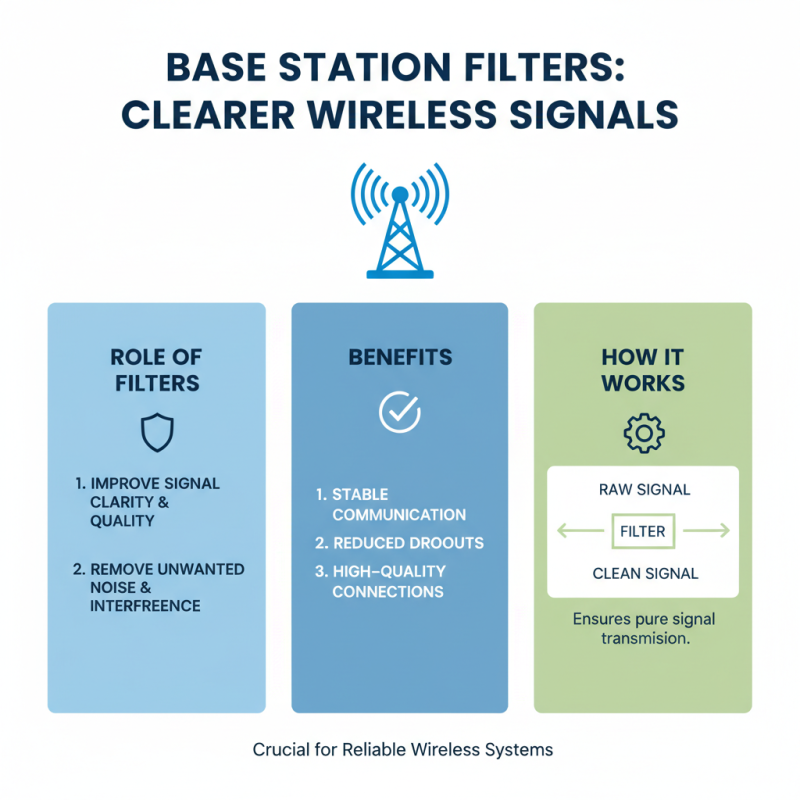
Base station filters are crucial in wireless systems. They help improve the clarity and quality of signals transmitted between devices. Proper filtering removes unnecessary noise and interference from various sources. This ensures that communication remains stable, reducing dropouts and maintaining high-quality connections.
When selecting filters, consider frequency ranges. Different applications require different specifications. Some filters focus on narrow frequency bands, while others cover broader ranges. This variety may lead to confusion. The choice may not always be straightforward, especially for complex environments.
Documentation and testing are vital to effective selection. It is often overlooked, yet it allows users to understand their specific needs better. Without thorough analysis, users may end up with underperforming filters. This misstep can hinder the overall performance of the wireless system. Each site presents unique challenges that demand careful evaluation before a decision is made.
Types of Base Station Filters and Their Applications
Base station filters play a crucial role in wireless communication. They help manage signal quality and mitigate interference. There are different types of filters designed for specific applications. Each type has unique characteristics.
Bandpass filters allow signals within a certain frequency range to pass through. They are essential for cellular networks. These filters help improve call quality and data speed.
Bandstop filters, on the other hand, block specific frequency ranges. They can eliminate unwanted signals, reducing noise.
Another type is the diplexers. These are useful in systems where two different types of signals coexist. Diplexers separate the incoming and outgoing frequencies, ensuring clear communication. While these filters are effective, selecting the right one can be challenging.
Factors include frequency range, power levels, and environmental conditions. Sometimes, even with careful selection, performance issues may arise. Operators must continually monitor and adjust as needed.
Key Factors to Consider When Selecting Base Station Filters
When selecting base station filters, several key factors require careful consideration.
Frequency range is crucial. Filters must support the specific frequency bands used for wireless communication.
Inaccurate frequency settings can lead to poor performance.
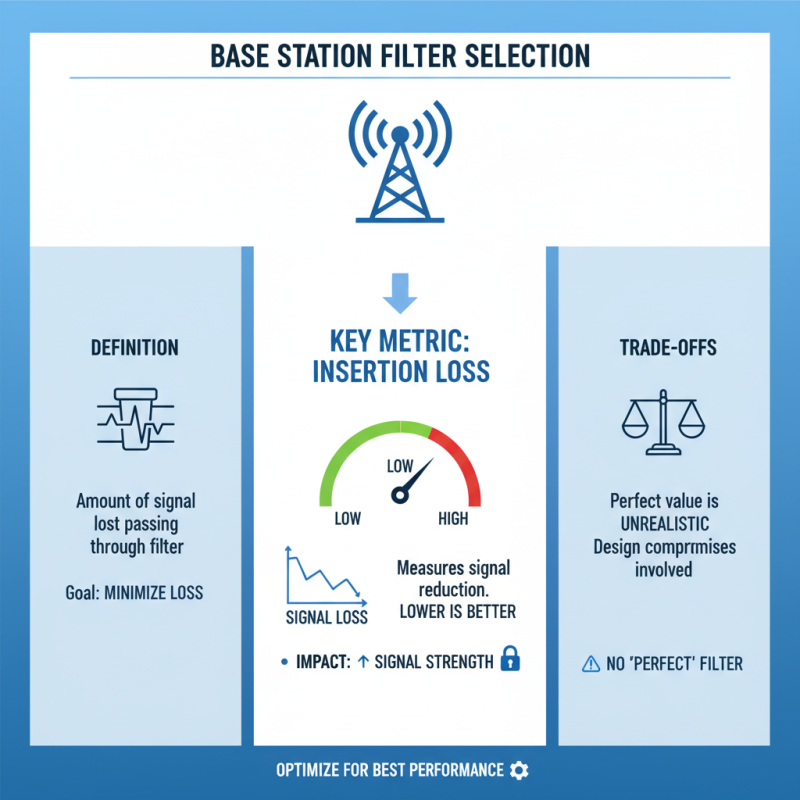
The insertion loss is another factor. High insertion loss can degrade signal quality. Aim for low loss to maintain effective communication.
Next, the power rating of the filters is essential.
Filters need to handle the power levels of the base station.
Insufficient power rating may result in equipment damage. Also, consider the filter design—whether it's passive or active.
Each type has different performance characteristics.
Active filters may provide better selectivity but can introduce noise.
Lastly, environmental factors can't be ignored.
Filters may be exposed to harsh conditions. Weather resistance becomes a priority.
Dust, temperature, and humidity can affect performance. It's a challenge to find filters that balance all these aspects.
Constantly reassess your choices to ensure optimal performance.
Best Practices for Installing and Maintaining Base Station Filters
When it comes to installing base station filters, precision is key. Proper placement can significantly enhance wireless performance. It's essential to assess the environment carefully. Obstructions and interference can negatively impact signal quality. Ensure that filters are strategically positioned to avoid any potential blockage. Regularly checking these placements can lead to improved outcomes.
Maintenance is equally vital. Dust and grime can accumulate on filters, degrading performance over time. A simple cleaning routine can prevent many issues. Inspect filters every few months. Pay attention to any signs of wear and tear. Sometimes, filters may need replacement rather than just cleaning. Noticing performance dips early can save a lot of trouble later on.
Document everything during your installation and maintenance processes. Keeping track of when filters were installed and last maintained is useful. This can reveal patterns in performance changes. If difficulties arise, refer back to the logs. These records can guide future installations or adjustments. Remember, continuous improvement is essential. The more you learn, the better your wireless performance becomes.