
Why Choose Radar Filters for Global Procurement?
Global radar programs depend on clean signals, stable performance, and dependable supply. Radar Filters help protect sensitive receivers from unwanted energy, while preserving the frequencies that matter. In a coastal surveillance station, for example, a well-specified filter can reduce interference from nearby communication transmitters. That difference may appear small in a laboratory. It becomes important during continuous operation.
Dr. David M. Pozar, a leading microwave engineering authority, describes the core function clearly: “A filter is a two-port network used to control the frequency response at a certain point in a system.” This principle makes procurement more than a price comparison. Buyers must examine insertion loss, rejection levels, power handling, operating temperature, connector design, and documented test results. They should also check whether the supplier can support repeat production across regions. Consistent documentation matters.
Supply reliability matters too.
A global supplier may offer shorter lead times, regional technical support, and clearer quality controls. Packaging should protect connectors and housing surfaces during long-distance transport. Traceability should reach the individual batch or serial number. Still, no supplier is perfect. Specifications can be misunderstood, and delivery promises can change. That risk deserves honest review.
Experienced procurement teams often request sample validation before approving volume orders. They compare measured data against datasheets, not assumptions. They also confirm export requirements and installation conditions through qualified professionals. With careful evaluation, Radar Filters can support stronger system performance, predictable maintenance, and more resilient international sourcing. The process is practical, but not effortless.
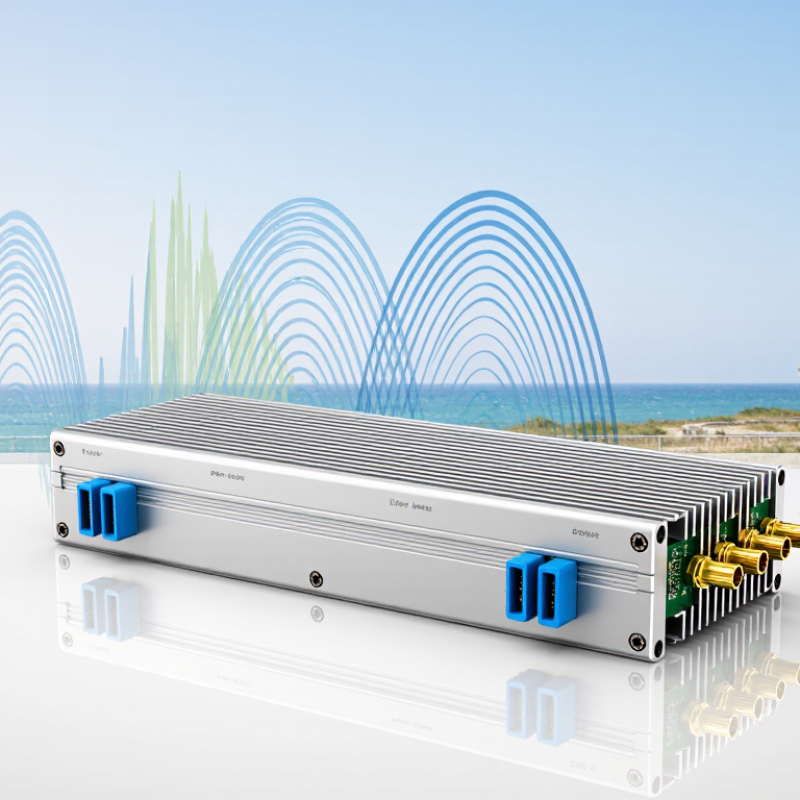
Radar filters are radio-frequency components that control which signals enter or leave a radar system. They pass selected frequency bands and reduce unwanted energy. This helps protect receivers from interference, overload, and false readings. Common designs include band-pass, low-pass, and notch filters. Each design serves a different operating condition.
For procurement teams, the filter is not just a line item. Its insertion loss, rejection level, bandwidth, power handling, and temperature range affect system performance. A practical specification should include operating frequencies, connector type, housing material, vibration limits, and inspection requirements. It should also state test methods clearly. Small wording gaps can create expensive misunderstandings.
Real procurement work requires more than comparing prices. Engineers and buyers should review test reports, production capacity, traceability, and expected service life. Samples can reveal issues that datasheets hide, such as weak connectors or unstable performance after thermal cycling. That said, no supplier evaluation is perfect. Forecasts change. Requirements are sometimes incomplete. A careful team keeps alternatives qualified and records every technical assumption. Delivery schedules, export documentation, and quality controls also need regular review. Reliable sourcing depends on evidence, not confident promises.

Radar filters are selected according to the operating frequency range, required bandwidth, interference environment, power handling, and environmental conditions. The chart shows internationally recognized radar frequency bands and their usable frequency spans, helping procurement teams compare filter requirements across applications without relying on supplier or brand data.
Radar filters must satisfy more than a frequency range on a datasheet. They control unwanted signals, protect receiver sensitivity, and support reliable detection in crowded electromagnetic environments. MarketsandMarkets estimates the global radar market will grow from USD 35.9 billion in 2023 to USD 49.6 billion by 2028. That expansion increases pressure on procurement teams to secure stable, technically consistent components.
The critical requirements are measurable. Engineers normally review passband accuracy, insertion loss, rejection levels, power handling, temperature stability, and group delay. Mechanical details also matter. A filter installed inside a compact enclosure may face vibration, moisture, and repeated thermal cycling. Procurement specifications should therefore include test methods, inspection records, material declarations, and lot traceability. NIST SP 800-161 Rev. 1 also emphasizes documented supply-chain risk controls, which makes supplier transparency an operational requirement, not a paperwork preference.
Global sourcing adds another layer. Teams need realistic lead times, engineering change notifications, replacement planning, and at least one qualified alternative. IEC 62402:2019 supports this focus through formal obsolescence-management practices. A lower unit price can still be the wrong answer. It may create redesign costs when performance drifts between production lots. In practice, dual sourcing is helpful, but it is not automatically safe. Different suppliers may interpret the same rejection specification differently. That weakness deserves attention. Procurement and engineering should compare measured samples, not promises, before approving a global supply route.
Global buyers evaluate radar filter suppliers beyond unit price. They examine measured performance, production discipline, and supply continuity. A filter may look acceptable on paper, yet fail after temperature cycling or repeated handling. Buyers therefore request insertion-loss curves, rejection data, power ratings, and test conditions. Clear records matter.
A practical supplier review also checks materials, calibration methods, inspection frequency, and corrective-action history. Engineers should compare samples from different production lots. One successful prototype proves very little. The supplier must show stable results across frequency, temperature, and operating power. ISO 9001 certification helps, but it does not replace technical evidence. This is often overlooked.
Resilience is now a procurement metric. McKinsey’s 2022 report, Risk, Resilience, and Rebalancing in Global Value Chains, found that 90% of surveyed supply-chain leaders had invested in resilience. It also reported that 71% experienced negative disruption effects. Buyers should therefore assess lead-time accuracy, secondary capacity, and change-notification procedures. Delivery promises need evidence, not polished presentations. A supplier’s response to a failed batch can reveal more than its sales materials. That evaluation is imperfect, but it is more realistic.
Radar filters provide procurement value beyond frequency selection. They can reduce interference, protect receiver sensitivity, and support stable performance across different markets. The 2023 McKinsey Global Supply Chain Leader Survey found that 92% of companies had changed their supply chain footprints since 2020. This shift makes interchangeable, well-documented filter designs more valuable. A common specification can simplify qualification in Europe, Asia, and North America. It can also reduce duplicated testing, emergency purchasing, and excess safety stock.
Procurement teams should compare insertion loss, rejection levels, operating temperature, package size, and documented test methods. A filter that performs well at 25°C may drift inside a sealed radar enclosure. That detail matters. Engineers and buyers should review tolerance data, calibration records, and second-source compatibility before approving volume orders. International standards from the International Telecommunication Union and regional conformity frameworks can guide frequency and electromagnetic compatibility checks. Clear documentation lowers review time and strengthens supplier accountability.
There is a practical limitation. The cheapest unit price may hide tooling changes, long lead times, or minimum-order pressure. Poorly controlled substitutions can also create field failures. I have seen procurement comparisons focus too heavily on quotation sheets. Total cost deserves more attention. The 2024 Global CPO Survey identifies resilience and cost control as continuing procurement priorities. Radar filters support both when buyers use lifecycle pricing, dual-source planning, and repeatable acceptance tests. Some specifications remain imperfect. Regular field feedback should refine them.
Why Choose Radar Filters for Global Procurement?
Global procurement teams face quality, compliance, and supply risks at the same time. Radar filters help them examine these risks before purchase orders move forward. They can screen suppliers by certification status, inspection history, delivery performance, and country-specific requirements. This creates a clearer view of hidden weaknesses.
A practical system should connect supplier records with batch numbers, test reports, and shipping documents. It can flag expired certificates, unusual price changes, or repeated delivery delays. Procurement managers can then request evidence instead of relying on polished sales claims. One missing document matters.
Quality teams may review samples before approving larger volumes. Compliance specialists can check whether product descriptions match import rules and technical standards. Risk analysts can monitor port congestion, weather disruptions, and sudden capacity changes. These checks support decisions with traceable evidence. Human judgment remains essential.
No filter catches every issue. Data may be incomplete, delayed, or entered incorrectly. A supplier with strong records can still experience a factory problem tomorrow. Teams should review alerts, document exceptions, and question results that appear too convenient. That discipline makes the process more reliable. It also reveals where internal procedures need improvement.
Radar filters work best as a decision-support layer, not an automatic approval machine. When organizations combine digital screening with audits, inspections, and open supplier communication, they gain stronger control over changing global conditions.
| Radar Filter | Procurement Dimension | Key Indicator | Verified Data Point or External Benchmark | Recommended Review Evidence | Risk Interpretation | Priority |
|---|---|---|---|---|---|---|
| Quality | Incoming product conformity | Defect and non-conformance rate | Use an internal target of ≤1.0% defective units for approved suppliers, with tighter limits for safety-critical products. Acceptance-sampling plans should be defined before inspection. | Inspection records, corrective-action reports, process-capability results, and documented acceptance-sampling procedures. | Repeated non-conformance can create hidden costs through rework, returns, production delays, and customer complaints. | High |
| Quality | Management-system maturity | Quality-management certification and audit closure | ISO 9001 is an internationally recognized quality-management standard. Certification alone does not prove product quality; unresolved major audit findings should be treated as a material risk. | Current certificate scope, certificate validity, audit findings, closure dates, and site-specific process controls. | A certificate with an unsuitable scope or weak corrective-action discipline may provide limited assurance. | Medium |
| Regulatory Compliance | Data and incident notification | Personal-data breach escalation | Under the EU General Data Protection Regulation, a notifiable personal-data breach generally must be reported to the supervisory authority within 72 hours after awareness. | Data-processing agreements, incident-response procedures, notification workflows, access controls, and breach-test records. | Suppliers handling personal data without a tested escalation process can create legal, operational, and reputational exposure. | High |
| Supply Continuity | Dependence on international logistics | Transport-mode and route concentration | More than 80% of world merchandise trade by volume is transported by sea. A single-port, single-route, or single-mode dependency increases disruption sensitivity. | Port-of-loading data, lane maps, transit-time history, alternative routes, buffer-stock policy, and freight-capacity commitments. | High concentration can amplify the effects of port congestion, weather events, geopolitical restrictions, or carrier disruptions. | High |
| Market Volatility | Exposure to global demand changes | Trade-volume sensitivity | Global merchandise trade volume declined by approximately 1.2% in 2023 and was forecast to grow by approximately 2.6% in 2024 in the April 2024 global trade outlook. | Supplier capacity plans, order-book trends, lead-time history, production-flexibility data, and demand-scenario analysis. | Suppliers dependent on a narrow customer or product segment may face unstable capacity and pricing during demand swings. | Medium |
| Financial Resilience | Supplier solvency and cash-flow stability | Liquidity and payment-risk signals | No single financial ratio is sufficient for approval. A multi-period review should cover current liabilities, operating cash flow, debt maturity, payment history, and dependence on customer advances. | Audited financial statements, credit assessment, trade references, insurance coverage, and continuity plans for critical suppliers. | Financial stress can result in delayed deliveries, quality shortcuts, sudden price increases, or business interruption. | High |
| Cybersecurity | Digital supply-chain exposure | Security governance and recovery capability | The NIST Cybersecurity Framework 2.0 organizes cybersecurity activities into six functions: Govern, Identify, Protect, Detect, Respond, and Recover. | Security policies, access reviews, vulnerability-management reports, backup tests, incident logs, and third-party risk assessments. | Weak supplier controls can provide an entry point for operational disruption, data loss, fraud, or unauthorized system access. | High |
| Sustainability | Upstream environmental visibility | Scope 3 purchased-goods data quality | Purchased goods and services are classified as Scope 3 Category 1 under the GHG Protocol. Primary supplier activity data is generally more decision-useful than spend-only estimates. | Product carbon footprints, energy data, emissions boundaries, calculation methods, verification records, and improvement targets. | Limited upstream data reduces the ability to identify emissions hotspots, meet reporting obligations, and compare sourcing options. | Medium |
| Ethical Sourcing | Labor and human-rights controls | Traceability beyond the immediate supplier | Risk increases when the buyer cannot identify production sites, labor providers, or key raw-material origins beyond Tier 1. | Supplier code of conduct, site lists, worker grievance channels, social-audit results, remediation records, and subcontractor approvals. | Low-tier visibility can conceal forced-labor, excessive-working-hours, recruitment-fee, or unsafe-workplace risks. | High |