Leave Your Message
Global buyers need Military Filters because protection cannot depend on geography, assumptions, or ideal operating conditions. A facility may face dusty air, industrial smoke, biological particles, or chemical contaminants during an emergency. Its filtration system must continue working when power is limited, maintenance teams are distant, and replacement parts are delayed. That reality changes the purchasing question. Buyers are not simply choosing a filter. They are evaluating airflow, pressure drop, sealing quality, service life, testing standards, and supply continuity.
Dr. David Ensor, a respected aerosol and filtration specialist, has stated, “A filter is only effective when it is properly selected, installed, and maintained.” That principle deserves attention. A high-efficiency filter can fail through a damaged gasket, incorrect fitting, or neglected inspection. Small gaps matter. So does condensation. In a real control room, a clogged filter may raise fan loads, increase noise, and reduce ventilation before anyone notices the risk.
Reliable procurement therefore requires more than a product brochure. Global buyers should request independent test data, traceable manufacturing records, clear installation instructions, and documented maintenance requirements. They should also confirm whether the supplier can provide consistent specifications across different production batches. Standards vary between regions, and translation errors can create uncomfortable misunderstandings. This is not a minor detail.
Military Filters are valuable when they support a complete protection strategy, not when they are treated as a symbolic purchase. Even experienced teams can overlook lifecycle costs, operator training, or local service capacity. That gap deserves honest review. The strongest decision combines technical evidence, practical field experience, and cautious planning before conditions become difficult.
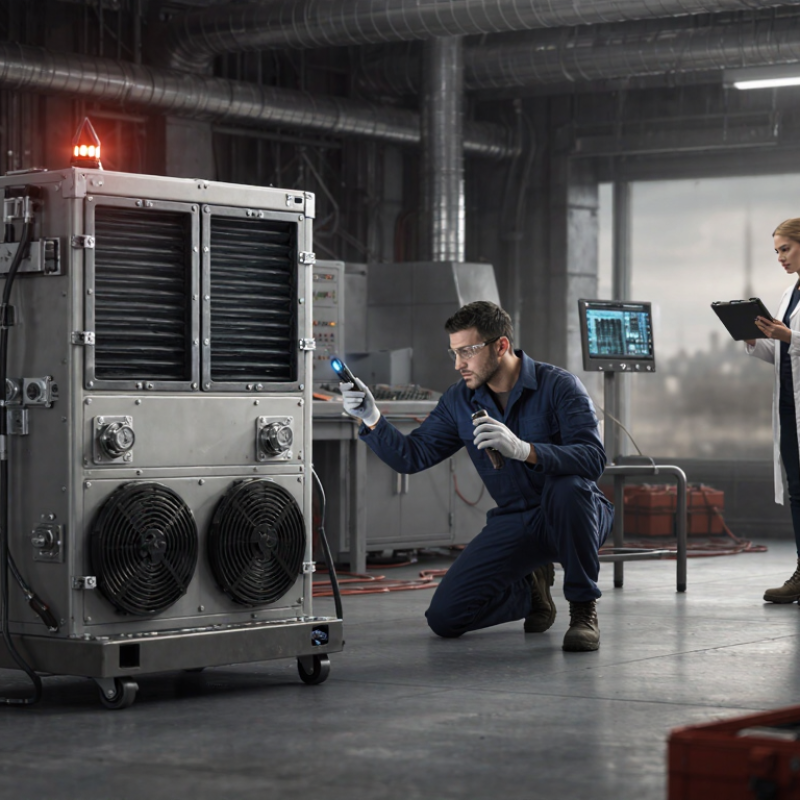
Military filters are engineered filtration systems for demanding environments, not a single product category. They may clean air, water, fuel, hydraulic fluid, or electronic cooling paths. Their purpose is practical: protect people, vehicles, and sensitive equipment from dust, moisture, smoke, particles, and other contaminants. Global buyers often need them for deserts, coastal regions, freezing climates, and rough transport conditions.
Most military filters work through several layers. A coarse layer captures larger particles first. Finer media then trap smaller contaminants by depth filtration or surface screening. Some designs use activated materials to adsorb selected vapors. Separators may remove water droplets from fuel or compressed air. Every layer creates pressure loss, so engineers must balance cleanliness, airflow, service life, and energy use. A filter that performs well in a laboratory may behave differently after vibration, humidity, or careless installation. That limitation deserves attention.
Tips: Check the required particle size, flow rate, pressure range, temperature, and replacement interval. Ask for independent test records, material traceability, and clear storage instructions. Confirm whether performance data reflects real operating conditions. Filter ratings can be misunderstood. Procurement teams should also inspect seals, housing strength, and maintenance access before approval. Field technicians can reveal problems that technical sheets miss, such as blocked access panels or fragile connectors. A strong purchasing decision depends on verified evidence, not impressive wording.
| Filter Category | Primary Threat or Contaminant | How It Works | Typical Performance or Rating | Typical Military or Civil-Defense Use | Important Limitation |
|---|---|---|---|---|---|
| Particulate pre-filter | Dust, sand, fibers, coarse aerosols, and larger particles | Uses interception, impaction, and sometimes inertial separation to remove larger particles before they reach finer filter media. | Performance varies by design; commonly selected to reduce dust loading on downstream filters. | Vehicles, shelters, field hospitals, generators, and equipment exposed to dusty environments | Does not normally provide reliable protection against fine aerosols, toxic gases, or vapors. |
| High-efficiency particulate filter | Fine dust, smoke, bacteria-carrying droplets, and many airborne particles | A dense fiber matrix captures particles through diffusion, interception, and impaction. The most penetrating particle size is often near 0.1–0.3 micrometers, depending on design and airflow. | A commonly cited HEPA benchmark is at least 99.97% efficiency for 0.3 micrometer particles under the applicable test method. | Enclosed shelters, command vehicles, medical areas, aircraft cabins, and ventilation systems | Removes particles, not most chemical vapors or gases; leaks around seals can significantly reduce system performance. |
| Electrostatic or electrically assisted filter | Fine particles and aerosols, including smoke and dust | Electrostatic forces attract charged particles to collection surfaces or enhance capture within fibrous media. | Efficiency depends on particle size, charge, airflow, humidity, and whether electrical power is available. | Portable air cleaners, vehicle ventilation, and temporary protected spaces | Power failure, high humidity, dust loading, or poor maintenance may reduce effectiveness. |
| Activated-carbon gas filter | Many organic vapors and selected chemical gases | Porous carbon adsorbs gas molecules onto a large internal surface area. Some designs add chemically treated sorbents for specific gases. | Capacity depends on carbon mass, impregnation, humidity, temperature, concentration, and contact time rather than one universal percentage. | Chemical-protection masks, shelters, vehicle cabins, and industrial emergency equipment | Sorbent capacity can be exhausted; breakthrough may occur suddenly, and no single carbon formulation protects against every gas. |
| Combined particulate and gas filter | Particles together with selected gases or vapors | Combines a particulate layer with an adsorbent or chemically treated gas layer in one cartridge or canister. | May be classified under particulate and gas-filter standards such as EN 14387 and EN 143, depending on the product and market. | Respiratory protection, protected rooms, vehicles, and emergency response operations | The filter must match the identified hazard; an all-purpose cartridge should not be assumed to protect against unknown substances. |
| CBRN protective filter | Selected chemical, biological, radiological, and nuclear contamination hazards | Uses high-efficiency particle media plus specialized sorbents and, in some designs, additional protection against radioactive particles or specific toxic industrial chemicals. | Ratings are application- and standard-specific; certification must identify the tested agents, flow rates, breakthrough limits, and service conditions. | Protective masks, shelters, reconnaissance vehicles, decontamination areas, and emergency teams | Protection is limited to the tested threat set and specified operating conditions; it does not make contaminated areas safe. |
| Nuclear or radioactive-particle filter | Radioactive dust, fallout particles, and contaminated aerosols | Captures radioactive particles mechanically; it does not neutralize radiation or remove penetrating gamma and neutron radiation. | Often uses high-efficiency particulate media; the required efficiency depends on the shelter, equipment, and applicable test standard. | Shelters, monitoring posts, vehicles, and respiratory protection | Does not provide complete radiation shielding and must be replaced or handled safely after contamination. |
| Pressurized collective-protection system | Outdoor contaminated air entering an occupied enclosure | Filters incoming air and maintains positive pressure so unfiltered air is less likely to enter through small openings. | Effectiveness depends on filter performance, airflow, enclosure leakage, pressure control, and correct operation. | Command posts, field shelters, medical facilities, transport vehicles, and protected workspaces | A failed fan, open door, damaged seal, or inadequate maintenance can compromise the entire protection system. |
| Hydrophobic or moisture-resistant filter | Rain, splash, condensation, and humid operating environments | Uses water-resistant media, coatings, drainage features, or protective housings to reduce wetting and maintain airflow. | Water resistance is verified through the relevant product test; it does not automatically indicate chemical or particulate efficiency. | Marine operations, amphibious vehicles, tropical deployments, and outdoor ventilation systems | Water resistance cannot compensate for an unsuitable filter rating, damaged housing, or prolonged immersion. |